Neurepiomics 2026 San Antonio, Texas
Toward Equitable AI for Alzheimer's Disease Detection Across Diverse Populations
An invited presentation on equitable artificial intelligence for Alzheimer's disease detection across diverse populations.
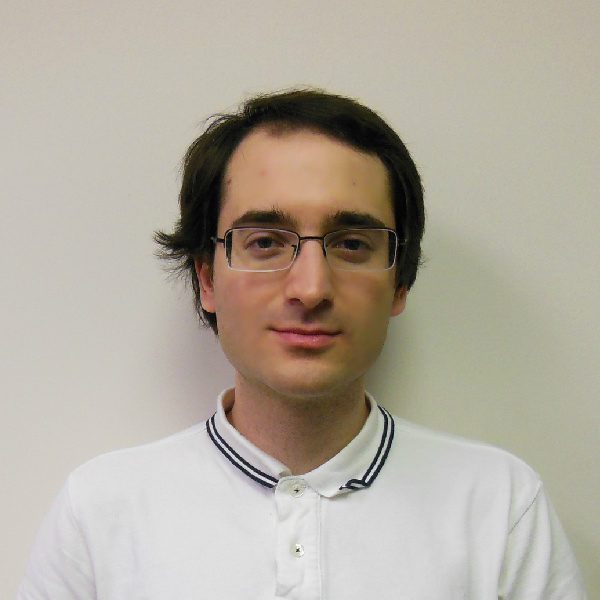
I'm Ngoc-Huynh Ho, a computer scientist exploring how trustworthy, multimodal AI can help us understand the brain and the people behind the data.
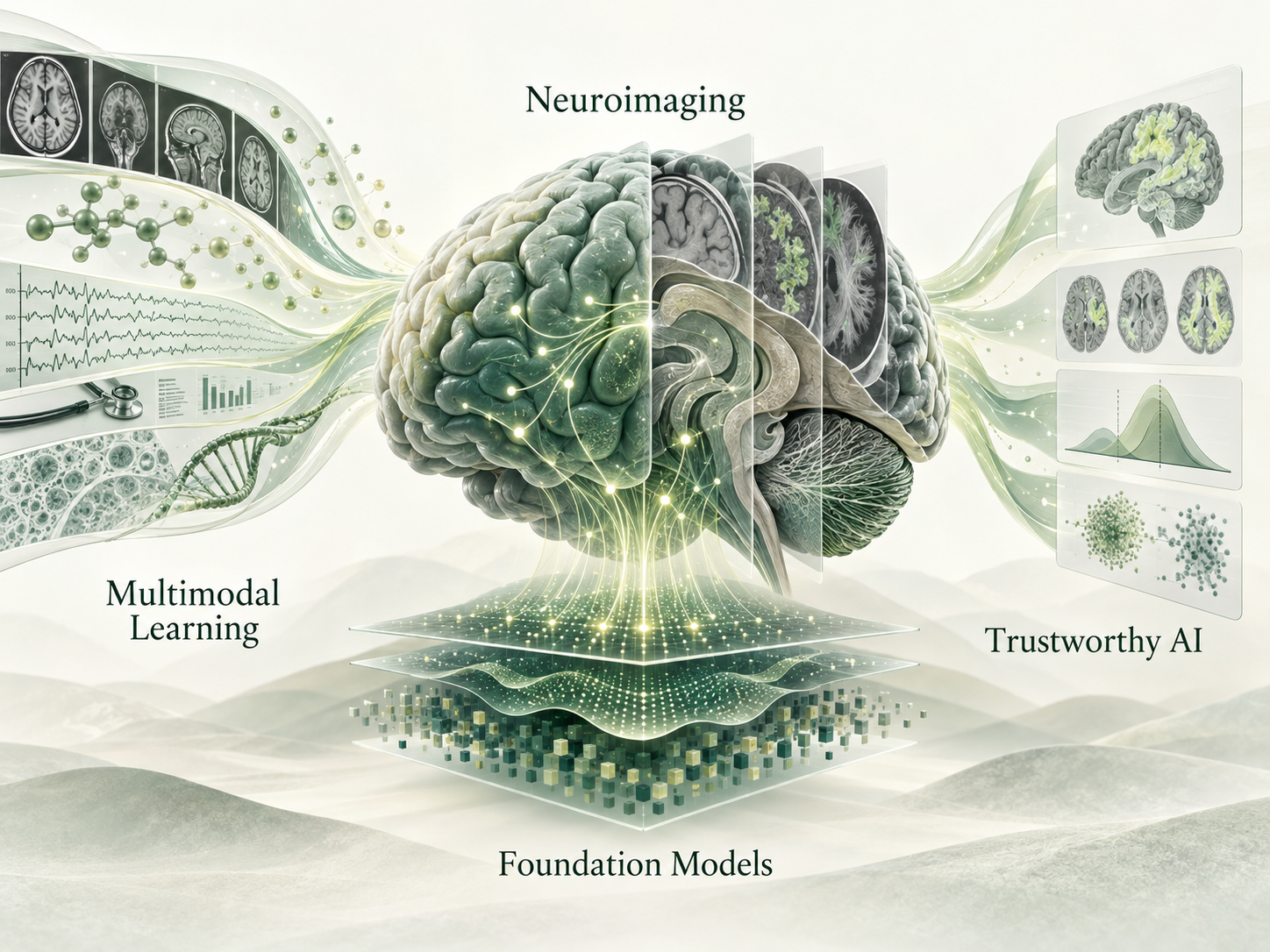
Better models.
A deeper understanding.
A closer look at the problems, methods, and findings behind my journal publications. Choose a theme to explore the story.
Neurepiomics 2026 San Antonio, Texas
An invited presentation on equitable artificial intelligence for Alzheimer's disease detection across diverse populations.
Alzheimer's & Dementia 22(10) (2026), e71889
eClinicalMedicine 99 (2026), p. 104143
Nature Communications 17 (2026), p. 8026
Source code Open research appBrain Research Bulletin 237 (2026), p. 111815
IEEE Journal of Biomedical and Health Informatics 29 (2025), p. 259-272
Applied Sciences 14 (2024), p. 6742
IEEE Access 12 (2024), p. 11243
Scientific Reports 13 (2023), p. 11243
IEEE Access 11 (2023), p. 56634-56648
Neural Networks 150 (2022), p. 422-439
IEEE Access 9 (2021)
Applied Sciences 11.11 (2021), p. 5194
Multimedia Tools and Applications 80 (2021), p. 10473-10490
IEEE Access 8 (2020), p. 61672-61686
Applied Sciences 10.17 (2020), p. 5729
Applied Sciences 10.2 (2020), p. 722
IEEE Access 7 (2019), p. 6825-6833
Soft Computing 22 (2018), p. 61672-61686
IJCCC 13.4 (2018), p. 566-573
Sensors 16.9 (2016), p. 1423
Wireless Personal Communications 84 (2015), p. 2513-2536
 SAN ANTONIO, TEXAS / USA
I'm an Instructor at UT Health Science Center at San Antonio, working on machine learning for neurodegenerative disease diagnosis. I completed my postdoctoral position and began my Instructor appointment in May 2026.
My PhD in AI Convergence at Chonnam National University brought together disease progression prediction and multimodal emotion recognition. I'm interested in what happens when computational methods meet the complexity of real people.
Chonnam National UniversityGwangju, S. Korea
“A Study on Prediction of Alzheimer's Disease Progression Using Bidirectional-Progressive Recurrent Networks”. 2020.
Kookmin UniversitySeoul, S. Korea
“Distance Estimation Considering Varying Walking Speed for Smartphone PDR Using Adaptive Step-Length Estimation”. 2016
Hochiminh City University of TechnologyHochiminh, Vietnam
“Impact of Channel Estimation Error on the Performance of Relay Selection in Cognitive Radio Networks”. 2014
Windows · Linux · Microsoft Office · LaTeX
Vietnamese (mother tongue) · English (pre-advanced)
Colleagues and mentors connecting computer science, engineering, and clinical research.

Glenn Biggs Institute for Alzheimer's & Neurodegenerative Diseases
UT Health Science Center at San Antonio
Glenn Biggs Institute for Alzheimer's & Neurodegenerative Diseases
UT Health Science Center at San Antonio

AI Convergence
Chonnam National University

Electrical Engineering
Kookmin University

AI Convergence
Chonnam National University

Nuclear Medicine
Chonnam National University Hospital
I'd be happy to hear from you.
hon3@uthscsa.eduNeuroimage Analytics Laboratory
UT Health Science Center
San Antonio, Texas, USA